
Technology
A pessary that learns, monitors, and responds.
Smart Pessary integrates four converging technologies into a single intravaginal device: mechanical pelvic support, embedded biosensing, AI-driven analytics, and gentle neuromuscular stimulation.
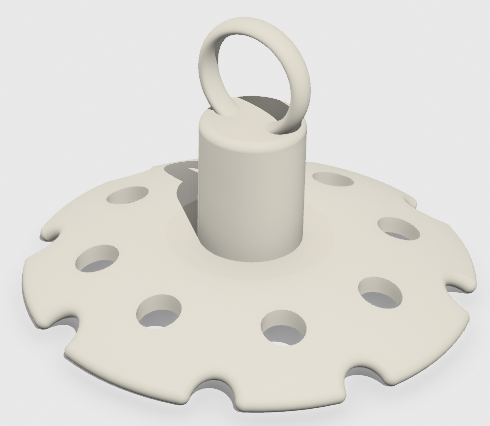
Why current pessaries fall short
A pessary is one of the oldest interventions in medicine — a passive support device placed in the vagina to hold pelvic organs in position. Modern silicone designs are safe and inexpensive, but the underlying paradigm has not changed in decades. They tell the clinician nothing. They do nothing for the underlying muscle weakness. They cannot warn of irritation or infection before symptoms emerge. Up to half of women discontinue use within the first year.
Pelvic organ prolapse care needs a feedback loop. Smart Pessary builds it in.
Architecture overview
The device retains the form factor and biocompatibility of established pessaries — a body-safe silicone shell with proven mechanical support — and adds four functional subsystems:
Embedded biosensor array
Multi-modal sensors continuously measure local pressure, temperature, pH, and bioimpedance — capturing both mechanical load on the device and the surrounding tissue environment.
Adaptive biofeedback
Closed-loop control adjusts gentle stimulation patterns based on sensor feedback — coaching pelvic-floor muscle activation in real time to address the underlying weakness driving prolapse.
AI-driven monitoring
Machine-learning models trained on multimodal sensor streams detect emerging tissue irritation, bacterial vaginosis signatures, urinary tract infection precursors, and prolapse-stage changes — surfacing them to clinicians before they become symptomatic.
Patient & clinician dashboards
Encrypted data sync to a secure cloud platform with two views — a patient app for proactive engagement, and a clinician portal for actionable population-level insights.
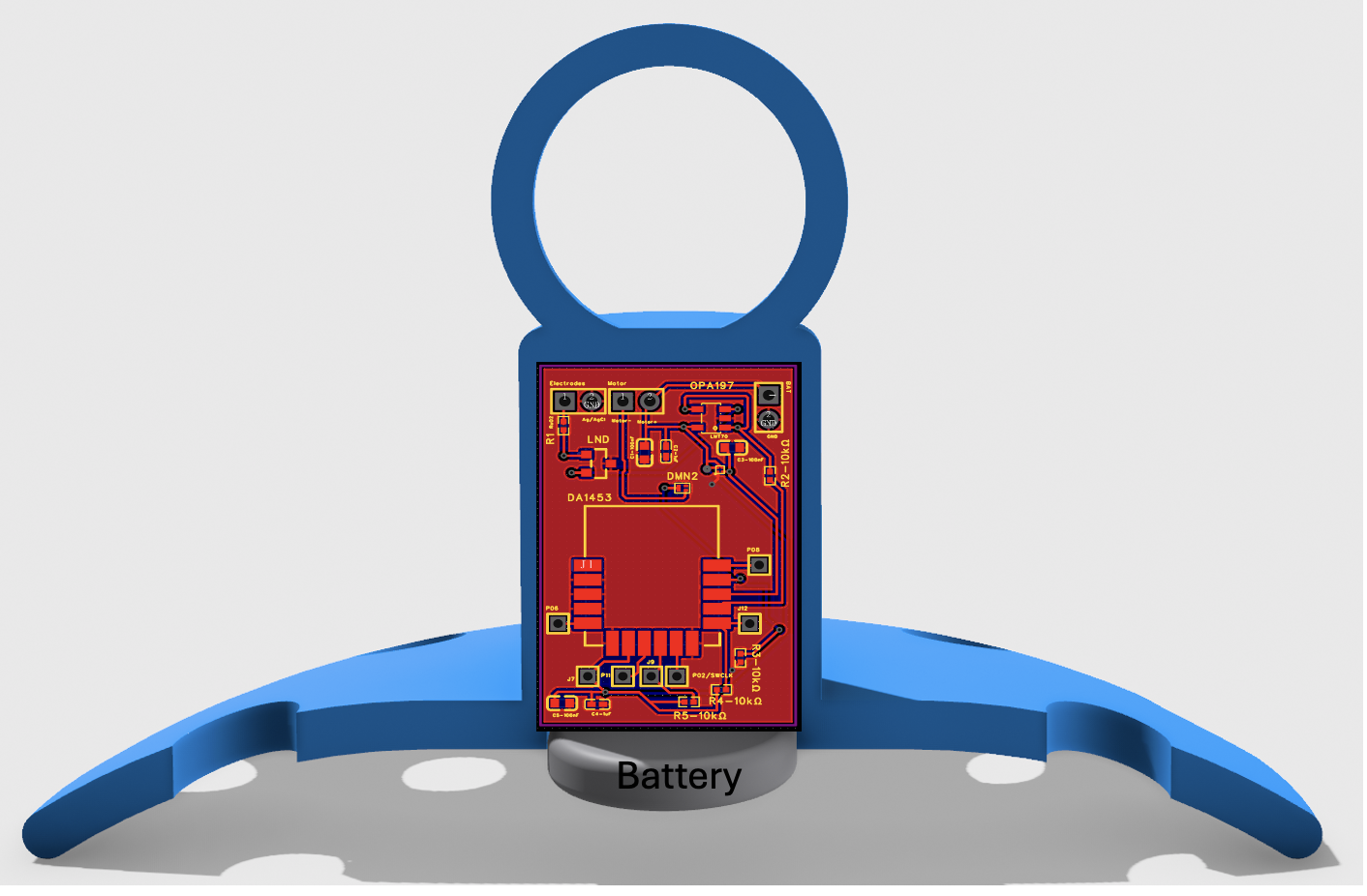
Internal architecture — sensor electronics encapsulated within medical-grade silicone
Engineering hidden inside a familiar form factor
Every electronic component — sensor array, microcontroller, BLE radio, and battery — is fully encapsulated inside the device's biocompatible silicone shell. Externally, Smart Pessary looks and handles like a conventional pessary clinicians and patients already know. Internally, it streams continuous data about the device's local environment and the surrounding tissue.
If the electronics ever fail or are deactivated, the device continues to function as a standard mechanical pessary. There is no scenario in which a battery failure leaves the patient without support — by design.
Intellectual property and regulatory pathway
The Smart Pessary platform is supported by issued and pending patents covering the device architecture, sensor integration, and the biofeedback control method. We are pursuing a 510(k) regulatory pathway with an established mechanical pessary as the predicate, layered with a De Novo classification request for the sensing and stimulation functions.
The current device is an investigational device — not FDA approved. Pre-clinical and benchtop validation work is underway with academic and clinical partners, and we are preparing for first-in-human studies.
Build with us.
If you are a clinician interested in early validation, an engineer interested in joining, or an investor evaluating the opportunity — reach out.
Get in touch →